Borderline Personality Disorder Treatments – Therapy, Medication, and Recovery Explained
Living with intense emotions, unstable relationships, and a shifting sense of identity can feel overwhelming — especially when you're unsure what's happening or where to turn. If you or someone you care about has been researching borderline personality disorder (BPD), you've likely wondered what borderline personality disorder treatments actually look like and whether real improvement is possible. This guide walks you through every major treatment option — from evidence-based therapies like DBT and MBT, to medication support, care settings, and what recovery truly means. You'll also find practical self-help strategies and next steps to help you move forward with clarity. To start reflecting on your own patterns, you can explore our personality disorder test as a helpful first step.
What Does BPD Treatment Typically Involve?
Borderline personality disorder treatments generally combine psychotherapy, possible medication support, and self-care practices. The goal isn't to "fix" someone — it's to help you build skills for managing emotions, strengthening relationships, and developing a more stable sense of self.
Most mental health professionals consider therapy the cornerstone of BPD treatment. Medication may be added to address specific co-occurring symptoms like depression, anxiety, or mood instability. However, no single pill treats BPD itself.
Why Psychotherapy Is the Foundation of BPD Treatment
Psychotherapy works because BPD involves deeply rooted patterns in how you relate to yourself, your emotions, and other people. These patterns respond best to consistent, structured therapeutic relationships rather than medication alone.
Evidence-based therapies help you:
- Recognize emotional triggers before they escalate
- Develop healthier coping strategies for distress
- Improve communication and relationship skills
- Build a stronger, more stable sense of identity
Because these changes require time and practice, treatment for borderline personality disorder typically involves regular sessions over months or even years.
What to Expect When Starting BPD Therapy
Starting therapy can feel intimidating. In your first few sessions, your therapist will likely ask about your history, current challenges, and goals. You won't be expected to share everything at once.
Here's what most initial sessions include:
- A conversational assessment of your emotional patterns and relationship history
- Discussion of what you hope to gain from treatment
- An overview of the therapy approach and what sessions will look like
- Setting expectations for frequency, duration, and homework between sessions
It's normal to feel uncertain at first. A good therapist will work at your pace and create a safe space for honest conversation.
Which Types of Therapy Work Best for BPD?
Several evidence-based therapies have shown strong results for borderline personality disorder treatment. Each focuses on different aspects of BPD, so the best fit depends on your specific needs and preferences.
Dialectical Behavior Therapy (DBT) — Skills for Emotional Balance
DBT is the most widely researched and commonly recommended treatment for borderline personality disorder. Developed by Dr. Marsha Linehan, DBT combines cognitive-behavioral techniques with mindfulness practices.
DBT teaches four core skill sets:
- Mindfulness — staying present without judgment
- Distress tolerance — surviving crisis moments without making things worse
- Emotion regulation — understanding and managing intense feelings
- Interpersonal effectiveness — communicating needs while maintaining relationships
Treatment usually includes weekly individual therapy, group skills training, and phone coaching for real-time support between sessions.
Mentalization-Based Therapy (MBT) — Understanding Your Own Mind
MBT focuses on improving your ability to "mentalize" — meaning your capacity to understand your own mental states and those of others. When mentalizing breaks down, misunderstandings and emotional reactions tend to escalate.
This therapy helps you:
- Pause before reacting to recognize what you're actually feeling
- Consider why other people might behave the way they do
- Reduce impulsive actions driven by emotional misreading
MBT often involves both individual and group sessions and tends to be especially helpful for improving relationship patterns.
Schema Therapy — Rewriting Deep-Rooted Patterns
Schema therapy targets long-standing negative beliefs and behavioral patterns — called "schemas" — that often develop during childhood. For example, someone with BPD may carry deep schemas around abandonment, mistrust, or defectiveness.
In schema therapy, you work to:
- Identify the specific schemas driving your emotional reactions
- Understand how these patterns formed in your early experiences
- Gradually replace harmful patterns with healthier ones through experiential techniques
This approach tends to be longer-term and may suit individuals who haven't responded fully to other borderline personality disorder treatments.
Transference-Focused Psychotherapy (TFP) — Exploring Relationship Dynamics
TFP is a psychodynamic approach that uses the therapeutic relationship itself as a tool for change. By examining how you relate to your therapist — including patterns of idealization, anger, or withdrawal — you gain insight into how similar dynamics play out in your everyday relationships.
TFP may be a good fit if you want a deeper understanding of how your attachment patterns shape your interactions.
Cognitive Behavioral Therapy (CBT) — Restructuring Thought Patterns
While CBT was not originally designed for BPD, it can still be helpful — especially for managing specific symptoms like anxiety, depression, or negative thinking patterns. CBT helps you identify distorted thoughts and replace them with more balanced perspectives.
For BPD specifically, CBT is often most effective when combined with other specialized approaches like DBT or schema therapy.
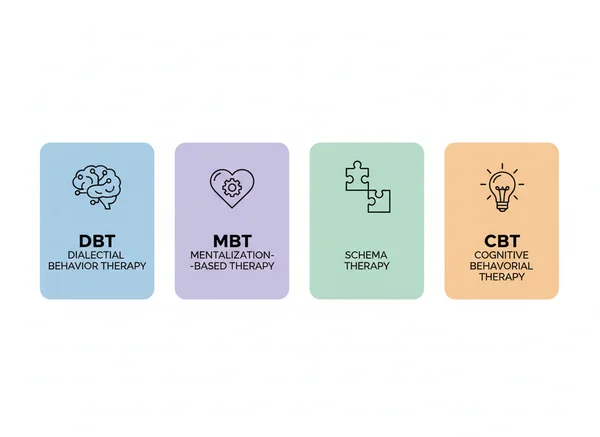
How to Compare DBT, MBT, Schema Therapy, and CBT
Choosing the right therapy can feel confusing. Here's a quick comparison to help:
| Therapy | Primary Focus | Best For | Typical Format |
|---|---|---|---|
| DBT | Emotion regulation & distress tolerance | Intense emotions, self-harm, crisis behaviors | Individual + group skills |
| MBT | Understanding mental states | Relationship difficulties, impulsive reactions | Individual + group |
| Schema Therapy | Core beliefs & childhood patterns | Deep-rooted patterns, treatment-resistant cases | Individual (longer-term) |
| TFP | Relationship dynamics via therapist bond | Attachment and identity issues | Individual |
| CBT | Thought restructuring | Co-occurring anxiety, depression | Individual (structured) |
Your therapist can help you determine which approach — or combination of approaches — fits your situation best.
What Role Does Medication Play in BPD Treatment?
No medication is specifically approved to treat borderline personality disorder itself. However, medication can help manage symptoms that frequently co-occur with BPD — such as depression, anxiety, impulsivity, and mood swings. Medication works best when combined with ongoing psychotherapy.
Antidepressants and SSRIs for Mood and Anxiety
Selective serotonin reuptake inhibitors (SSRIs) are among the most commonly prescribed medications for people with BPD. They may help with:
- Persistent low mood or depressive episodes
- Anxiety and worry
- Irritability and emotional sensitivity
Common examples include fluoxetine, sertraline, and escitalopram. Your prescriber will monitor how you respond and adjust dosages as needed.
Mood Stabilizers for Emotional Swings
Mood stabilizers — such as lamotrigine or valproate — may help reduce the intensity of emotional highs and lows. For some individuals, they can also help with impulsivity and aggression.
These medications are particularly worth discussing with your healthcare provider if rapid emotional shifts are a central part of your experience.
Antipsychotics for Impulsivity and Distorted Thinking
Low-dose atypical antipsychotics may be prescribed for symptoms like paranoia, severe dissociation, or intense anger. They can help reduce impulsive behaviors and cognitive distortions during high-stress periods.
Because these medications carry specific side effects, they're typically used cautiously and for targeted symptom management rather than long-term use.
Why Medication Alone Isn't Enough for BPD
Borderline personality disorder medication treatments work best as a complement to therapy — not a replacement. Medication can reduce the intensity of symptoms, which may make it easier to engage in therapy and practice new skills. However, the core patterns of BPD — emotional instability, interpersonal difficulties, identity disturbance — require therapeutic work to address at their roots.
If you're currently on medication, continue working closely with your prescribing doctor and therapist to optimize your treatment plan.

How Do Treatment Settings Differ — Outpatient, Residential, and Inpatient Care?
Treatment for borderline personality disorder happens across different care settings. The right level depends on the severity of your symptoms, your safety needs, and your current support system.
Outpatient Therapy — The Most Common Starting Point
Most people with BPD begin with outpatient therapy, attending sessions one to three times per week while continuing daily life at home. Outpatient care works well when you're stable enough to apply skills between sessions and don't face immediate safety concerns.
Outpatient programs may include:
- Individual therapy (DBT, MBT, or another approach)
- Group skills training
- Psychiatric appointments for medication management
Residential Programs for Intensive Support
Residential treatment for borderline personality disorder provides round-the-clock support in a structured living environment. Programs typically run from several weeks to several months.
Residential care may be appropriate if you:
- Haven't made progress with outpatient therapy alone
- Need a stable, structured environment to focus on recovery
- Are dealing with co-occurring conditions like substance use or severe depression
Inpatient Care — When Safety Is the Priority
Inpatient treatment for borderline personality disorder is short-term and focused on crisis stabilization. It's typically reserved for situations involving active self-harm, suicidal behavior, or severe psychiatric emergencies.
Inpatient stays usually last days to a few weeks and focus on stabilizing immediate safety before transitioning you to a less restrictive care setting.
What New and Emerging Treatments Are Available for BPD?
BPD treatment continues to evolve as researchers explore new approaches. While established therapies like DBT remain the gold standard, several newer options show promise.
Good Psychiatric Management (GPM) as a Flexible Framework
GPM is a practical, relationship-focused approach that gives clinicians a flexible framework for treating BPD. Unlike highly specialized therapies, GPM can be applied by a broader range of mental health professionals and adapted to individual needs.
GPM emphasizes understanding how interpersonal sensitivity drives BPD symptoms, making it a strong complement to other treatments.
Emerging Research — EMDR, Neurofeedback, and Beyond
Researchers are investigating several innovative approaches for new treatments for borderline personality disorder:
- EMDR (Eye Movement Desensitization and Reprocessing) — Originally developed for trauma, EMDR may help BPD patients process traumatic memories that fuel emotional instability.
- Neurofeedback — This brain-training technique aims to help individuals regulate emotional responses by monitoring and adjusting brainwave patterns.
- Compassion-focused therapy — An approach that targets self-criticism and shame, which are common in BPD.
- Digital therapeutics — App-based tools and online programs that extend therapeutic support between sessions.
These approaches are still building their evidence base. Talk to your provider about whether any emerging treatments might be appropriate for your situation.
Can BPD Be Cured — What Does Recovery Really Look Like?
One of the most common questions about borderline personality disorder treatments is whether BPD can be fully cured. The honest answer is nuanced — but it's more hopeful than many people expect.
What Research Says About Long-Term BPD Outcomes
Long-term studies show that many people with BPD experience significant improvement over time. Research suggests that a large percentage of individuals who receive consistent treatment no longer meet the full diagnostic criteria for BPD after several years.
Recovery doesn't mean you'll never experience emotional difficulty again. Instead, it means developing the skills and awareness to manage challenges more effectively — so they no longer dominate your life.
How Long Treatment Typically Takes
There's no fixed timeline for BPD treatment. Some people notice meaningful changes within months, while others benefit from ongoing therapy over several years.
Key factors that influence your treatment timeline include:
- The severity and complexity of your symptoms
- The type and consistency of therapy you receive
- Your support system and life circumstances
- Whether co-occurring conditions (depression, anxiety, trauma) are also being treated
The most important thing is consistent engagement. Progress may feel slow at times, but each step forward matters.
What Happens If BPD Is Left Untreated
Without treatment, BPD symptoms may worsen or remain chronic. Untreated borderline personality disorder can lead to:
- Ongoing relationship instability and conflict
- Difficulty maintaining employment or education
- Higher risk of co-occurring conditions like depression, substance use, and eating disorders
- Increased risk of self-harm
This isn't meant to create fear — it's meant to highlight that effective borderline personality disorder treatments exist, and seeking support is a worthwhile step at any point.

How Self-Reflection and Screening Tools Can Support Your Next Step
Understanding borderline personality disorder treatments is an important first step. But turning knowledge into action can feel like a big leap. Self-care strategies and educational tools can help bridge that gap.
Self-Care Strategies That Complement Professional Treatment
While therapy and medication form the core of BPD treatment, daily self-care practices can support your progress:
- Mindfulness and grounding exercises — Even five minutes of focused breathing can help during emotional spikes.
- Regular physical activity — Movement helps regulate mood and reduce anxiety.
- Sleep hygiene — Consistent sleep patterns support emotional stability.
- Journaling — Writing down your thoughts and patterns helps build self-awareness.
- Building a support network — Connecting with trusted friends, family, or support groups reduces isolation.
These aren't replacements for professional care, but they can make a real difference when practiced consistently.
How an Educational Screening Tool Can Help You Reflect
If you're still exploring whether your experiences might relate to BPD, a screening tool can help you organize your thoughts — without pressure or commitment.
Our free personality disorder screening is designed to help you reflect on your emotional patterns and personality traits in a structured way. It's not a diagnosis — it's a starting point for self-understanding.
This tool is for educational and self-reflection purposes only. It does not provide a clinical diagnosis and is not a substitute for professional evaluation. If your results raise concerns, we encourage you to speak with a qualified mental health professional.
Key Takeaways for Anyone Exploring BPD Treatment
Borderline personality disorder treatments have come a long way, and recovery is more accessible than ever. Here's what matters most:
- Therapy is the foundation. DBT, MBT, schema therapy, and other evidence-based approaches can lead to meaningful, lasting change.
- Medication supports — but doesn't replace — therapy. It can help manage specific co-occurring symptoms while you build new skills.
- Treatment settings range from outpatient to inpatient. The right level of care depends on your current needs and safety.
- Recovery is real. Many people with BPD see significant improvement with consistent treatment, even if it takes time.
- Self-reflection is a powerful first step. Understanding your own patterns helps you engage more effectively in treatment.
If you're ready to explore your personality patterns further, try our personality disorder screening tool to help organize your thoughts before your next conversation with a professional.
Frequently Asked Questions
What is the most effective treatment for borderline personality disorder?
Dialectical behavior therapy (DBT) is the most extensively researched and widely recommended treatment for BPD. It combines mindfulness, distress tolerance, emotion regulation, and interpersonal skills training. Other effective options include MBT, schema therapy, and TFP, depending on your needs.
Can BPD be fully cured?
BPD isn't typically described as "cured," but many people experience significant recovery. Research shows that with consistent treatment, many individuals no longer meet the full diagnostic criteria over time. Recovery means building the skills to manage emotions and relationships more effectively.
How long does BPD treatment usually take?
Treatment timelines vary widely. Some people notice meaningful improvements within several months, while others benefit from therapy over several years. Factors include symptom severity, therapy consistency, and whether co-occurring conditions are also being addressed.
What medications are used for borderline personality disorder?
No medication is specifically approved for BPD. However, doctors may prescribe SSRIs for depression and anxiety, mood stabilizers for emotional swings, or low-dose antipsychotics for impulsivity and paranoia — always as a complement to therapy.
Is BPD treatable without medication?
Yes. Many people with BPD improve significantly through psychotherapy alone, especially evidence-based approaches like DBT or MBT. Medication is optional and typically added only when specific co-occurring symptoms need additional support.
What should you expect during your first BPD therapy session?
Your therapist will likely ask about your history, emotional patterns, and goals. You won't be pressured to share everything right away. Expect a conversational assessment, an overview of the therapy approach, and a discussion of what future sessions will involve.
What happens if BPD is left untreated?
Without treatment, BPD symptoms may persist or worsen over time, potentially leading to relationship instability, difficulty with work or school, co-occurring mental health conditions, and increased risk of self-harm. Seeking support at any stage can make a meaningful difference.