DSM-5 Borderline Personality Disorder: Criteria, Symptoms, and Safe Self-Reflection
Searching for dsm 5 borderline personality disorder usually means you want something more precise than a casual symptom list. You may be trying to understand the DSM-5 criteria, compare BPD with other conditions, look up the clinical code, or decide whether an online BPD screening tool is a sensible first step. This guide explains the DSM-5 and DSM-5-TR framing in plain English while keeping one boundary clear: only a qualified mental health professional can make a formal clinical determination. If you want a private way to organize your reflections before a conversation, an educational personality disorder screening tool can help you notice patterns without turning them into a label.

What DSM-5 Means When It Describes Borderline Personality Disorder
The DSM-5 is the fifth edition of the Diagnostic and Statistical Manual of Mental Disorders, published by the American Psychiatric Association. DSM-5-TR is the text revision that updates explanatory language while keeping the core borderline personality disorder criteria essentially in the same familiar nine-area structure used by many clinicians and educational resources.
In DSM language, borderline personality disorder is not defined by one bad week, one intense relationship, or one dramatic argument. It is described as a long-running pattern involving instability in relationships, self-image, emotions, and impulsive behavior. The pattern is expected to appear across more than one setting and to begin by early adulthood.
That matters because BPD can be misunderstood. A person may have painful emotions without having BPD. A person may have relationship conflict because of stress, grief, trauma, depression, bipolar disorder, substance use, or an unsafe environment. DSM-style criteria are meant to guide a careful clinical evaluation, not to turn internet checklists into certainty.
DSM-5 Borderline Personality Disorder Criteria in Plain English
The DSM-5 borderline personality disorder criteria are often summarized as nine symptom areas. A clinician generally looks for a persistent pattern, not isolated moments. The person must also meet enough criteria, and the pattern must cause meaningful distress or impairment.
Here is a plain-English way to understand the nine areas without copying manual language:
- Strong fear of abandonment, whether the threat is real or anticipated.
- Intense and unstable relationships that can swing between closeness and disappointment.
- A shifting or unclear sense of identity, values, goals, or self-image.
- Impulsive choices in areas that may create harm, such as spending, sex, substances, driving, or eating.
- Repeated self-harm, suicidal threats, gestures, or behavior.
- Rapid emotional shifts that feel intense and reactive.
- Ongoing emptiness or a persistent hollow feeling.
- Intense anger or difficulty managing anger.
- Stress-related paranoia or dissociation that comes and goes.
This list can feel heavy. It is also easy to read yourself into it during a painful period. The more useful question is not "Do I match a list?" but "Are these patterns persistent, repeated across situations, and affecting my relationships, work, safety, or daily life?" For a gentler first pass, a private personality trait reflection can help you collect observations before deciding what support you want.

DSM-5 Borderline Personality Disorder Symptoms Versus Everyday Emotional Pain
Many people search for dsm 5 borderline personality disorder symptoms after a breakup, conflict, panic spiral, or confusing emotional crash. That is understandable, but symptoms need context.
BPD-related patterns are usually intense, recurring, and relational. A person may feel terrified of being left, react strongly to perceived rejection, struggle to hold a stable view of themselves, or shift rapidly from closeness to mistrust. These experiences can be painful for the person and confusing for people around them.
Everyday emotional pain can look similar on the surface. People without BPD can feel abandoned, angry, empty, impulsive, or unsure of themselves during major stress. Trauma responses, attachment wounds, depression, anxiety, ADHD, bipolar disorder, autism-related overload, and substance use can also overlap with parts of the BPD picture.
The difference is not whether a feeling is intense. The difference is the pattern: how often it happens, how long it has been happening, what triggers it, whether it appears across settings, and whether it causes harm or serious disruption. A responsible article can explain the criteria, but it cannot replace a full conversation with a professional who can ask follow-up questions.
DSM-5 Code, PDF Searches, and Age Criteria
People often search for the DSM-5 borderline personality disorder code. In DSM-5-style coding, borderline personality disorder is commonly associated with 301.83 and the ICD-10-CM code F60.3. Codes are mainly used for clinical records, billing, insurance, and communication between professionals. They are not a shorthand for understanding a whole person.
Searches for a DSM-5 borderline personality disorder PDF are also common. Be careful with random PDF copies. The DSM is a copyrighted professional manual, and unofficial downloads may be incomplete, outdated, or inaccurate. For personal learning, high-quality public health summaries and clinician-reviewed explanations are often more useful than trying to interpret manual text alone.
The age question needs care. DSM framing describes the pattern as beginning by early adulthood. In younger people, clinicians are especially cautious because personality, identity, emotion regulation, and relationships are still developing. A teenager can have serious distress that deserves support, but that does not mean an online article should treat normal development, trauma responses, or temporary crisis as a fixed personality label.
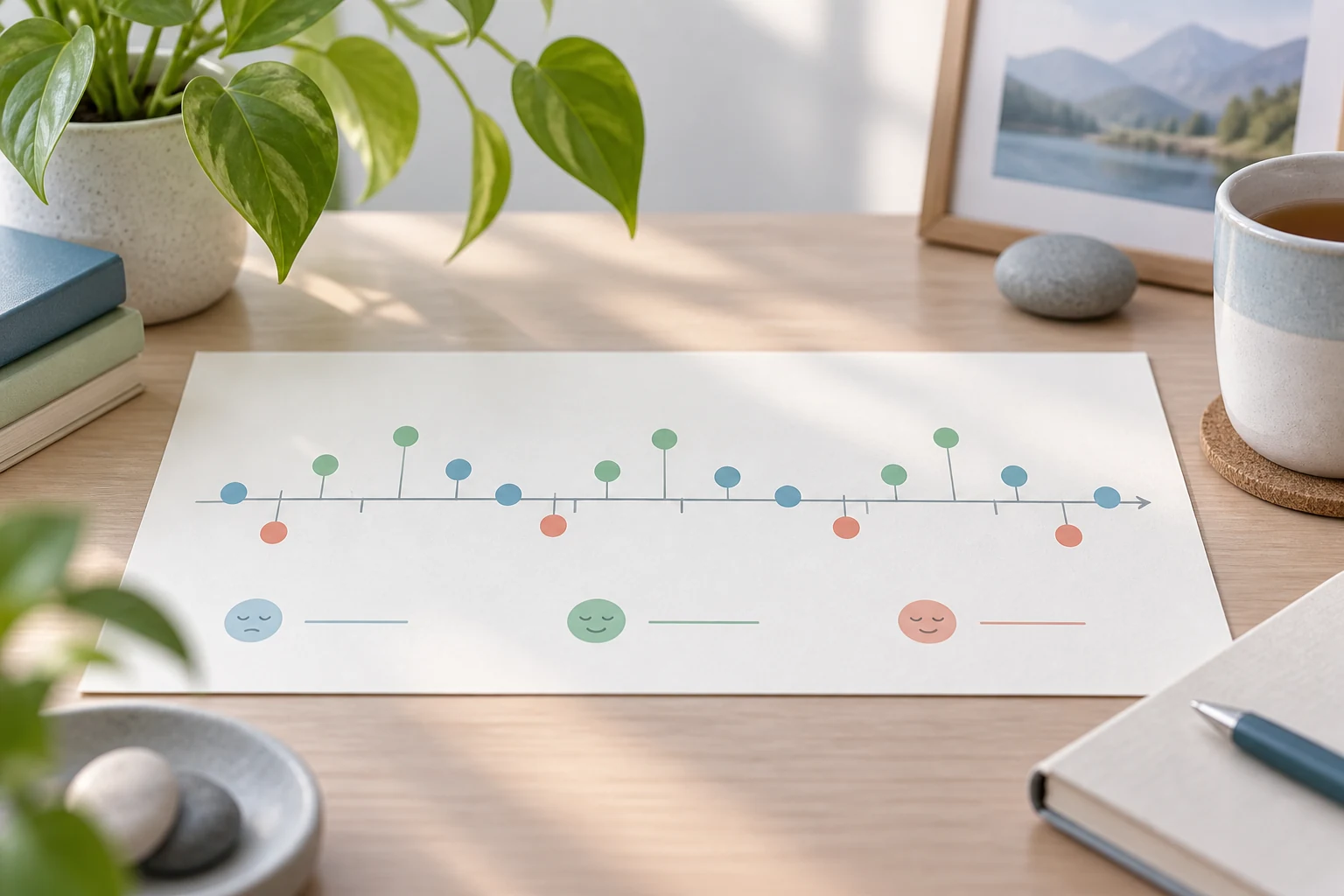
If the question is about you or someone close to you, the safer move is to track patterns over time: when they began, what situations bring them out, what reduces risk, and whether school, work, relationships, or safety are affected.
Are There Types of Borderline Personality Disorder in DSM-5?
DSM-5 does not divide borderline personality disorder into official subtypes such as "quiet BPD," "high-functioning BPD," or "impulsive BPD." Those phrases can describe how traits may show up, but they are not formal DSM-5 categories.
This distinction is important for SEO searches because "types of borderline personality disorder DSM-5" can lead to mixed information. Some educational websites use type labels to make patterns easier to discuss. For example, "quiet BPD" is often used for people who turn distress inward or hide it from others. That can be a useful conversation starter, but it should not be treated as a separate DSM condition.
A better way to think about variation is presentation. One person may mainly struggle with abandonment fear and emotional swings. Another may appear composed in public but experience severe internal shame and emptiness. Another may have high impulsivity during conflict. A clinician looks at the full pattern, history, safety risk, co-occurring conditions, and impairment instead of choosing a personality type from a menu.
What Can Trigger BPD-Like Reactions?
Common triggers can include perceived rejection, sudden distance from someone important, conflict, criticism, uncertainty in relationships, feeling ignored, or reminders of earlier emotional injury. For some people, stress, poor sleep, substance use, or major transitions can make reactions more intense.
The word "trigger" should be used thoughtfully. It does not mean a person is choosing their reaction, and it does not mean other people must manage every feeling for them. It means certain situations can activate a highly sensitive emotional and relational system. Skills-based therapy often helps people notice the sequence: event, interpretation, body response, urge, action, and aftermath.
For readers supporting someone else, the goal is not to walk on eggshells forever. The goal is to combine compassion with boundaries. Calm communication, predictable follow-through, and safety planning can help. So can knowing when a situation is beyond what friends or partners can responsibly handle alone.
DSM-5 Borderline Personality Disorder Treatment: What Usually Helps
DSM-5 criteria describe a clinical pattern; treatment planning is a separate step. Borderline personality disorder is commonly treated with psychotherapy. Dialectical behavior therapy is one well-known approach, especially for emotion regulation, distress tolerance, interpersonal effectiveness, and reducing self-harm risk. Other approaches may include mentalization-based therapy, schema therapy, transference-focused therapy, and general psychiatric management.
Medication is not usually presented as a stand-alone treatment for BPD itself. A prescriber may consider medication for co-occurring depression, anxiety, mood symptoms, sleep problems, or other conditions, but the plan should be individualized and monitored.
Good treatment is not about shaming the person into being less intense. It is about building skills, improving safety, understanding patterns, strengthening relationships, and reducing the behaviors that make life smaller. Progress can be uneven, especially when trust, trauma, or self-harm risk are part of the picture. Still, many people improve with consistent support.
How to Use DSM-5 Criteria for Safe Self-Reflection
DSM-5 borderline personality disorder criteria can be useful when they help you organize questions. They become risky when they turn into self-labeling, blaming someone else, or trying to settle a complex mental health question through a search result.
Try this safer reflection process:
- Write down repeated patterns, not one-time events.
- Note what happens before, during, and after intense reactions.
- Track whether the pattern appears in more than one relationship or setting.
- Separate feelings from actions: what you felt, what you did, and what you wish you could do differently.
- Bring the notes to a therapist, psychiatrist, counselor, or primary care clinician if distress, safety risk, or impairment is present.
If you want a low-pressure way to gather your thoughts, the site's self-reflection personality disorder test can be used as an educational prompt before a professional conversation. It should not be your final answer, and it should not be used to label another person during conflict.

FAQ
What are the 9 symptoms of BPD?
The nine DSM-5 criterion areas are commonly explained as abandonment fear, unstable intense relationships, unstable self-image, impulsive risk, self-harm or suicidal behavior, rapid mood reactivity, chronic emptiness, intense anger, and brief stress-related paranoia or dissociation. A professional looks for an ongoing pattern and broader context.
What are the "3 C's" of BPD?
The "3 C's" are not an official DSM-5 term for borderline personality disorder. Different educators may use that phrase in different ways. If you see it online, treat it as a memory aid or coaching concept, not as part of the DSM-5 criteria.
What triggers a person with borderline personality disorder?
Triggers often involve perceived abandonment, rejection, uncertainty, criticism, conflict, or sudden emotional distance. Stress, poor sleep, trauma reminders, or substance use may also increase sensitivity. Triggers vary by person, which is why careful pattern tracking is more useful than assuming one universal cause.
Are there DSM-5 types of borderline personality disorder?
No official DSM-5 subtypes divide BPD into separate types. Terms like quiet BPD or high-functioning BPD may describe how traits appear, but they are informal descriptions rather than separate DSM categories.
What is the DSM-5 borderline personality disorder code?
Borderline personality disorder is commonly associated with DSM-style code 301.83 and ICD-10-CM code F60.3. Codes are administrative and clinical reference tools. They do not explain severity, personal history, strengths, or the best support plan.
Can an online BPD test replace a professional evaluation?
No. An online tool can support education and self-reflection, but it cannot perform a full clinical evaluation. A professional can consider history, safety, co-occurring conditions, development, culture, medication, trauma, and current functioning.
What treatment is commonly used for BPD?
Psychotherapy is central. Dialectical behavior therapy is one widely known option, and other structured therapies may also help. Medication may be considered for co-occurring symptoms or conditions, but treatment choices should be discussed with a qualified clinician.