"Multiple Personality Disorder Test": Understanding DID vs. PDs
The phrase "multiple personality disorder test" is a common search term, often fueled by dramatic portrayals in movies and television. It speaks to a deep-seated curiosity about the nature of identity and the struggles of the human mind. But how do I check if I have a personality disorder, and is a "multiple personality disorder test" the right place to start? The answer is more complex than you might think, as the term itself is outdated and often points to a misunderstanding between two very different categories of mental health conditions.
This article aims to clear up the confusion. We'll explore the condition once known as Multiple Personality Disorder, now correctly termed Dissociative Identity Disorder (DID), and explain how it fundamentally differs from Personality Disorders (PDs). Our goal is to provide you with accurate, responsible information so you can find the right path toward understanding and support. If you're looking for clarity on personality traits and patterns, you're in the right place.
"Multiple Personality Disorder" & Its True Name: Dissociative Identity Disorder (DID)
Before we can compare conditions, it's crucial to use the correct terminology. The term you might be searching for has evolved based on a deeper clinical understanding. This is not just a matter of semantics; it reflects a more accurate and compassionate view of the condition.
What is Dissociative Identity Disorder (DID)?
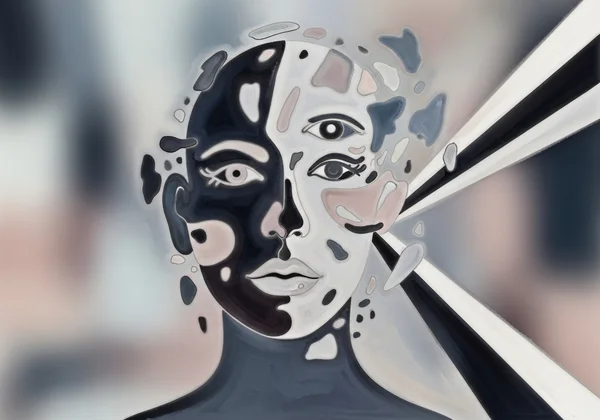
Dissociative Identity Disorder (DID) is a complex psychological condition characterized by a fragmentation, or splitting, of identity rather than a proliferation of separate personalities. According to the Diagnostic and Statistical Manual of Mental Disorders (DSM-5), its core features include:
- Identity Disruption: The presence of two or more distinct personality states, or "alters." These alters can have their own unique names, memories, characteristics, and ways of relating to the world.
- Recurrent Amnesia: Significant gaps in memory for everyday events, important personal information, or traumatic events that go beyond ordinary forgetfulness.
- Significant Distress: The symptoms cause clinically significant distress or impairment in social, occupational, or other important areas of functioning.
Crucially, DID is understood to be a coping mechanism that originates in response to severe, repetitive, and often overwhelming trauma during early childhood. The mind "dissociates" or detaches from reality to survive experiences that are too painful to integrate into a single, cohesive identity.
Why "Multiple Personality Disorder" and "Split Personality" are Outdated Terms
The term "Multiple Personality Disorder (MPD)" was officially changed to Dissociative Identity Disorder (DID) in 1994. This change was critical because "MPD" implied the presence of multiple fully-formed personalities within one person, which is a misleading simplification.
The modern understanding, reflected in the name "Dissociative Identity Disorder," emphasizes that the core issue is a failure to integrate various aspects of identity, memory, and consciousness. It's not about having "multiple people" inside you, but rather one person whose identity has become fragmented. Similarly, "split personality" is a colloquialism that lacks clinical precision and often carries a stigma. Using the correct term, DID, promotes better understanding and reduces misinformation.
DID vs. Personality Disorders: Unpacking the Key Differences
This is where many people get confused. While both DID and certain personality disorders can involve an unstable sense of self and relationship difficulties, they are fundamentally different conditions with distinct origins, mechanisms, and symptoms. Our website provides a scientifically-informed screening for personality disorder traits, not DID.
Understanding Personality Disorders: Stable Patterns, Not Fractured Identities
A personality disorder (PD) is an enduring and inflexible pattern of inner experience and outward behavior that deviates markedly from the expectations of the individual's culture. This pattern is pervasive across a broad range of personal and social situations and leads to significant distress or impairment.
Unlike DID, where identity is fragmented, a person with a PD has a stable—albeit maladaptive—sense of self. Their difficulties stem from rigid personality traits that affect how they think, feel, and relate to others. Examples include Borderline Personality Disorder (BPD), characterized by intense emotional instability and fear of abandonment, or Narcissistic Personality Disorder (NPD), marked by a pervasive pattern of grandiosity and a need for admiration.
Core Distinctions in Identity, Memory, and Origin
Let’s break down the fundamental differences in a clear, comparative way:
-
Identity:
- DID: Characterized by a fragmented identity with two or more distinct personality states (alters) that may take control of the person's behavior. The sense of self is not cohesive.
- Personality Disorders: Characterized by a stable but rigid self-perception. A person with BPD, for example, may have an unstable self-image, but they do not have separate, distinct identities that are amnestic to one another.
-
Memory:
- DID: A hallmark symptom is significant amnesia or memory gaps. An individual may have no recollection of what happened when another alter was in control.
- Personality Disorders: Memory is generally intact. While emotional distress can affect memory, there are no profound, recurrent gaps of the kind seen in DID.
-
Primary Cause:
- DID: Almost always linked to severe, repetitive childhood trauma as a psychological survival mechanism.
- Personality Disorders: Believed to result from a complex combination of genetic predispositions, environmental factors (including childhood experiences), and developmental influences.
-
Core Symptoms:
-
DID: Central symptoms are dissociative, including depersonalization (feeling detached from oneself), derealization (feeling the world isn't real), and amnesia.
-
Personality Disorders: Central symptoms involve pervasive difficulties in areas like emotion regulation, impulse control, interpersonal relationships, and self-image.
-

Can a Personality Disorder Test Screen for Dissociative Identity Disorder?
This is a critical question. Given the profound differences outlined above, the answer is a clear and responsible no. A test designed to screen for one cannot accurately assess the other.
What Our Personality Disorder Test Actually Assesses
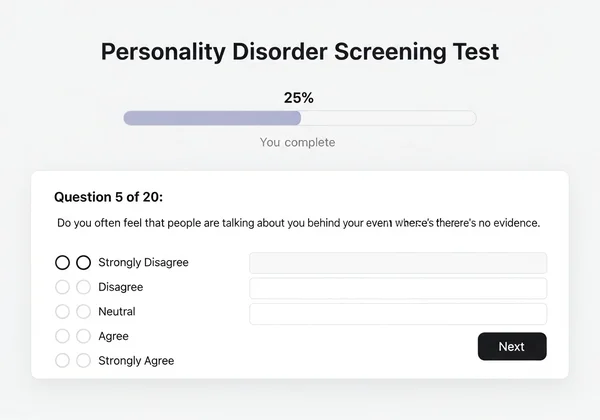
The free, confidential online personality disorder screening tool is specifically designed to be a preliminary screening tool for indicators related to various personality disorders. It draws from established psychological principles and criteria, like those found in the DSM-5, to help you identify patterns of thinking, feeling, and behaving that may warrant further attention.
It helps you reflect on enduring traits associated with conditions like Borderline, Narcissistic, Avoidant, or Obsessive-Compulsive Personality Disorders. It is an excellent first step for self-reflection and gaining initial insights, but it is not, and cannot be, a tool for assessing or diagnosing Dissociative Identity Disorder.
Seeking Professional Assessment for DID (and Personality Disorders)
Self-diagnosis through online tests can be misleading and even harmful. A formal diagnosis for any mental health condition must be made by a qualified professional after a comprehensive evaluation.
- If you suspect you have DID: It is essential to seek a psychiatrist, psychologist, or therapist who has specialized training and experience in treating trauma and dissociative disorders.
- If you suspect you have a Personality Disorder: A great next step after gaining preliminary insights from a screening tool like our personality disorder test is to consult with a mental health professional for a full assessment and to discuss potential treatment options like therapy.
Your Next Steps: From Misconception to Clarity and Support
Understanding the critical distinction between Dissociative Identity Disorder and Personality Disorders is the first step toward seeking the right kind of help. While popular media may blur the lines, these are distinct conditions requiring different diagnostic and therapeutic approaches. Confusing the two can lead to frustration and delay in getting appropriate support.
Remember, online tools are for preliminary insight, not diagnosis. If you believe your struggles align with the enduring patterns of a personality disorder, we encourage you to take our free test as a starting point for self-reflection. However, if you recognize symptoms of identity fragmentation and amnesia consistent with DID, please bypass online screeners and connect directly with a trauma-informed mental health specialist. Your journey to understanding begins with accurate information and the courage to take the right next step.

FAQ Section
Is "split personality" the same as Borderline Personality Disorder (BPD)?
No, they are very different. As explained, "split personality" is an inaccurate term for Dissociative Identity Disorder (DID), which involves a fragmented identity and amnesia. BPD is a personality disorder characterized by emotional instability, an intense fear of abandonment, and an unstable self-image, but it does not involve distinct, amnestic personality states.
How can I tell if my symptoms are DID or a personality disorder?
A qualified professional is the only one who can make a diagnosis. However, a key differentiator is the presence of amnesia. If you experience significant memory gaps or "lost time" where you cannot recall your actions, this is more indicative of a dissociative disorder like DID. Personality disorders involve more consistent, though dysfunctional, patterns of behavior without such profound amnesia. To explore your traits related to PDs, a screening can be a helpful start.
What is the most accurate test for Dissociative Identity Disorder?
There is no single online "test" for DID. The gold standard for diagnosis is a comprehensive clinical assessment conducted by a mental health professional experienced in dissociation. This process involves structured clinical interviews, such as the Dissociative Experiences Scale (DES) and the Structured Clinical Interview for Dissociative Disorders (SCID-D).
Can a person be diagnosed with both DID and a personality disorder?
Yes, comorbidity is possible. An individual can be diagnosed with both DID and a personality disorder, most commonly Borderline Personality Disorder. The complex trauma that leads to DID can also contribute to the development of PD traits. This highlights the importance of a thorough professional evaluation to understand the complete clinical picture.
What should my first step be if I suspect I have DID?
Your first and most important step should be to find a therapist or psychiatrist who specializes in trauma and dissociative disorders. Do not rely on online tests. Look for clinicians who list "dissociation," "complex trauma," or "DID" as specialties. A professional assessment is the only safe and effective path forward. For those concerned about personality patterns, our confidential test can offer a secure place to begin your inquiry.