NPD vs. Narcissism – Key Differences Everyone Should Understand
You have probably heard someone called a "narcissist" at least once. Maybe a friend vented about a self-absorbed ex, or a coworker described a demanding manager. The word gets tossed around casually — but there is a crucial line between everyday narcissistic traits and Narcissistic Personality Disorder (NPD). Understanding where that line falls can change the way you interpret behavior, protect your well-being, and decide whether professional support might help. This guide breaks down the real differences between narcissism and NPD, walks you through the warning signs, and offers a clear framework for what to do next. If you are curious about your own personality patterns, you can explore the personality disorder test as a starting point for self-reflection.
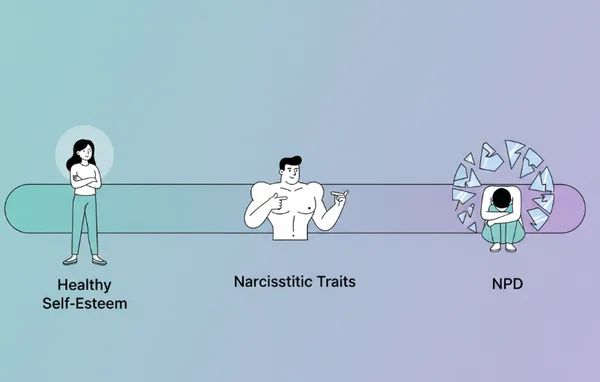
What Does Narcissism Actually Mean?
Narcissism, at its core, is a personality trait — not a diagnosis. It describes a pattern of self-focused thinking, a desire for admiration, and a tendency to prioritize your own needs. In moderate amounts, narcissism is not only normal but can be healthy. A reasonable level of self-regard helps you set boundaries, pursue ambitions, and maintain confidence under pressure.
Healthy Narcissism vs. Problematic Narcissism
Healthy narcissism looks like steady self-esteem that does not depend on constant praise. You can celebrate your wins without belittling others. Problematic narcissism, on the other hand, shows up when self-focus becomes rigid. You may dismiss other people's feelings, react poorly to feedback, or need external validation to feel okay about yourself. However, even problematic narcissistic traits do not automatically equal a personality disorder.
Why the Everyday Use of "Narcissist" Can Be Misleading
Pop culture has turned "narcissist" into a catch-all insult. Someone who takes too many selfies, brags at dinner, or ignores your opinion might get labeled a narcissist. While these behaviors can be frustrating, labeling someone with a clinical condition based on surface-level annoyance oversimplifies a complex spectrum. When the term is overused, it loses meaning — and it can stigmatize people who genuinely struggle with NPD.
What Is Narcissistic Personality Disorder (NPD)?
NPD is a diagnosable mental health condition listed in the DSM-5. It goes far beyond occasional self-centeredness. A person with NPD shows a persistent, pervasive pattern of grandiosity, need for admiration, and lack of empathy that disrupts nearly every area of life. These patterns typically begin in early adulthood and remain stable over time.
Core DSM-5 Criteria for NPD
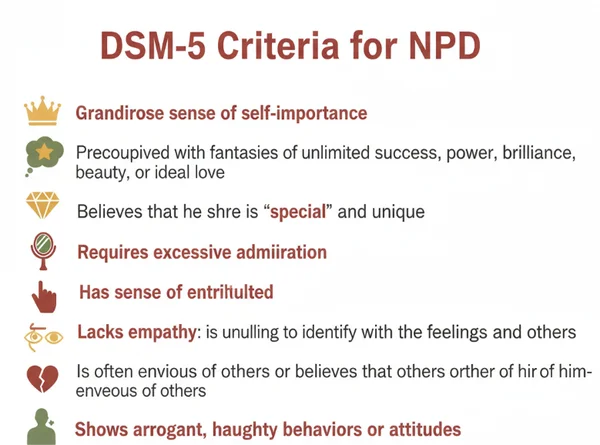
To meet a clinical diagnosis, a person must display at least five of these nine criteria:
- A grandiose sense of self-importance
- Preoccupation with fantasies of unlimited success, power, or beauty
- A belief that they are "special" and can only be understood by other special people
- An excessive need for admiration
- A sense of entitlement
- Interpersonally exploitative behavior
- A lack of empathy
- Envy of others, or a belief that others envy them
- Arrogant, haughty behaviors or attitudes
How Common Is NPD?
Research estimates that NPD affects roughly 0.5% to 6% of the general population. It is diagnosed more frequently in males. Because people with NPD rarely seek help on their own — they often do not see their behavior as problematic — the true prevalence may be difficult to pin down.
Narcissism vs. NPD – What Sets Them Apart?
This is the question at the heart of your search. Normal narcissism and NPD may look similar on the surface, but they differ in severity, persistence, and impact.
Degree of Severity and Rigidity
Narcissistic traits can be situational. You might act more self-centered during stressful periods or in competitive environments, then return to baseline. NPD, in contrast, is a fixed pattern. The behaviors are extreme, inflexible, and do not soften with time or context.
Impact on Relationships and Daily Life
A person with narcissistic traits may occasionally hurt someone's feelings but can still maintain reciprocal relationships. With NPD, relationships are consistently one-sided. The person may exploit friends, dismiss a partner's emotions, or react with rage to mild criticism. Over time, this pattern tends to damage nearly every close relationship.
Capacity for Self-Awareness and Accountability
People with narcissistic traits often recognize — at least sometimes — that their behavior was hurtful. They can apologize and adjust. Individuals with NPD frequently lack this self-awareness. When confronted, they may deflect, blame others, or rewrite the narrative entirely.
Quick Comparison: Narcissistic Traits vs. NPD
| Feature | Narcissistic Traits | NPD |
|---|---|---|
| Nature | Normal personality feature | Diagnosable mental health condition |
| Duration | Situational, may fluctuate | Persistent and pervasive |
| Empathy | Reduced at times | Consistently impaired |
| Self-awareness | Often present | Frequently absent |
| Relationships | Some difficulties | Severe, repeated disruption |
| Professional help needed | Rarely | Typically essential |
What Are the Different Types of NPD?
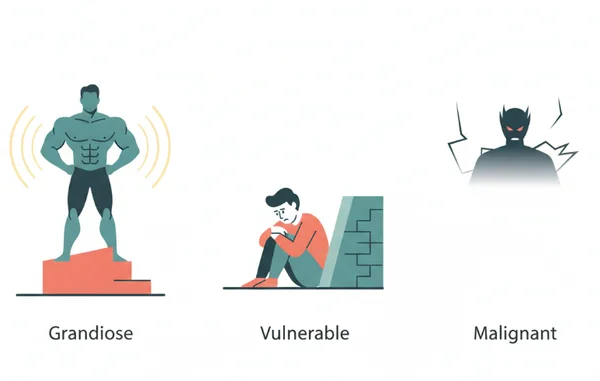
NPD is not one-size-fits-all. Clinicians and researchers recognize distinct presentations that can look very different from one another.
Grandiose (Overt) Narcissism
This is the type most people picture. Grandiose narcissists display open arrogance, social dominance, and an obvious sense of superiority. They tend to be charming at first but controlling underneath.
Vulnerable (Covert) Narcissism
Vulnerable narcissists present very differently. Instead of outward confidence, they display shame, hypersensitivity to criticism, and chronic feelings of inadequacy. However, they still maintain a deep sense of entitlement and may withdraw or become passive-aggressive when they feel unappreciated.
Malignant Narcissism
Malignant narcissism combines NPD traits with antisocial behavior, aggression, and sometimes sadistic tendencies. While not a formal DSM-5 diagnosis on its own, mental health professionals use the term to describe a particularly harmful pattern.
How Can You Recognize Narcissistic Patterns in Someone Close to You?
Identifying narcissistic behavior in a friend, partner, or family member takes more than a single red flag. Look for consistent patterns over time rather than isolated incidents.
Common Behavioral Warning Signs
- Conversations always circle back to them
- They dismiss or minimize your feelings
- They react to constructive feedback with anger or withdrawal
- They need constant compliments and become upset without them
- They take credit for your achievements or ideas
- They struggle to celebrate your successes
When to Consider Whether It Might Be NPD
If the behaviors above are persistent, appear across multiple settings (work, home, friendships), and cause significant harm to others, it may go beyond personality traits. A trained mental health professional is the only person who can make a formal diagnosis. As a next step, reflecting on patterns you have noticed may help you organize your thoughts before seeking support.
What to Do If You Suspect NPD in Yourself or Someone Else
Recognizing the possibility of NPD — in yourself or a loved one — can feel overwhelming. Here is a practical framework for moving forward.
Steps for Self-Reflection
- Write down specific situations where you noticed the patterns discussed above
- Ask yourself honest questions: Do I frequently need external validation? Do I struggle to consider other people's perspectives? Do I react with disproportionate anger to criticism?
- Review your relationship history: Is there a recurring pattern of conflict, resentment, or broken connections?
- Be gentle with yourself: Noticing patterns is a sign of growth, not a verdict
When Professional Support Makes Sense
Consider seeking professional help when:
- The patterns are causing significant distress in your life or relationships
- You have received repeated feedback that your behavior hurts others
- You feel unable to change the behaviors on your own
- A loved one's behavior is affecting your mental health and you need coping strategies
Therapy — particularly approaches like schema therapy or psychodynamic therapy — is the primary treatment pathway for NPD. It is a long-term process, but change is possible with consistent effort.
Explore Your Personality Patterns Through Self-Reflection
Understanding personality traits — including narcissistic tendencies — starts with honest self-reflection. While no online tool replaces a professional evaluation, structured self-reflection can help you organize your thoughts, identify patterns, and decide whether further support might be valuable.
Our personality disorder screening tool is designed to be an educational resource. It draws on established psychological frameworks to help you explore traits and patterns in a confidential, pressure-free environment. The results are not a diagnosis — they are a starting point for deeper self-understanding.
This tool is for educational purposes only. It does not diagnose any condition and should not replace consultation with a qualified mental health professional.
Wrapping Up – Narcissism and NPD Are Not the Same Thing
The difference between narcissism and NPD matters more than most people realize. Narcissistic traits are a normal part of personality. Everyone has moments of self-focus, and a healthy dose of self-regard helps you thrive. NPD, however, is a clinical condition marked by rigid, pervasive patterns that damage relationships, careers, and personal well-being.
If you have recognized some of these patterns — whether in yourself or someone you care about — the most important next step is getting informed. Read further, talk to a professional, and remember that self-awareness is the foundation of meaningful change. You can also take our personality disorder screening to begin organizing your thoughts in a safe, confidential setting.
Frequently Asked Questions
Is narcissism always a bad thing?
Not necessarily. A healthy level of narcissism supports confidence, ambition, and strong personal boundaries. It only becomes problematic when self-focus is rigid, empathy is consistently lacking, and relationships suffer as a result.
Can someone have narcissistic traits without having NPD?
Yes, and most people do. Narcissistic traits exist on a spectrum. Having some self-focused tendencies does not mean you have a personality disorder — it means you are human. NPD requires a persistent pattern of at least five specific criteria.
What is the difference between covert narcissism and NPD?
Covert narcissism describes a presentation style — not a separate condition. A person with NPD may present as either grandiose (overt) or vulnerable (covert). Covert narcissists often appear shy or insecure but still harbor deep entitlement and struggle with empathy.
Can NPD be treated or cured?
NPD cannot be "cured" in the traditional sense, but symptoms can improve significantly with consistent, long-term psychotherapy. Schema therapy and psychodynamic approaches tend to show the most promise. Progress depends heavily on the individual's willingness to engage in the process.
How do I know if I should see a professional about narcissistic traits?
Consider professional support if narcissistic patterns are causing repeated relationship problems, significant personal distress, difficulty functioning at work, or if others have consistently expressed that your behavior is hurtful. A qualified therapist can help you understand what you are experiencing.
Does pathological narcissism differ from clinical NPD?
Pathological narcissism is a broader term used in research to describe narcissistic functioning that causes impairment but may not meet all DSM-5 criteria for NPD. Think of it as an umbrella concept — NPD is one specific diagnosis that falls within it.