Personality Disorder Clusters Explained: A Clear Guide to Cluster A, B, and C
Personality disorder clusters are a way to organize the ten personality disorders into three broad groups: Cluster A, Cluster B, and Cluster C. Each group describes shared patterns in thinking, emotion, relationships, and behavior. The clusters can make a confusing topic easier to approach, especially if you are trying to understand a test result, a term you heard in therapy, or a pattern that keeps showing up in relationships. They are not labels for judging people, and they cannot replace a formal clinical evaluation. If you want a gentle place to begin reflecting, an educational personality pattern check-in can help you organize questions to discuss with a qualified professional.
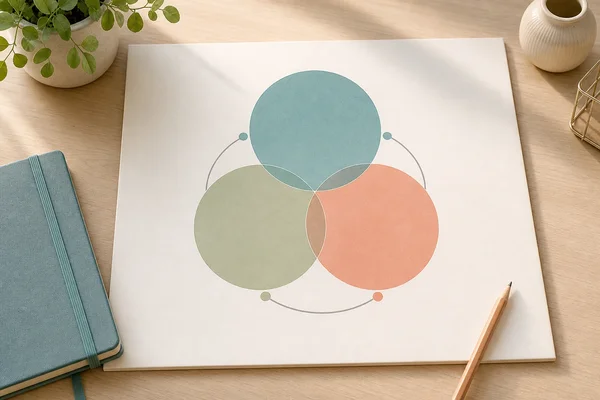
What Are Personality Disorder Clusters?
In DSM-5-TR language, the ten personality disorders are commonly grouped into three clusters based on descriptive similarities. The purpose is practical: it helps students, clinicians, and readers remember which conditions tend to share a broad style.
Cluster A is often described as odd or eccentric. Cluster B is often described as dramatic, emotional, or erratic. Cluster C is often described as anxious or fearful. Those short phrases are useful as memory hooks, but they are not full explanations of any person.
A person is more than a cluster. Someone may have traits that resemble one group, traits that cross into another group, or distress that comes from anxiety, trauma, mood symptoms, substance use, neurodevelopmental differences, life stress, or relationship history. That is why clusters are best understood as a map, not as a final answer.
The 3 Personality Disorder Clusters at a Glance
The phrase "the 3 personality disorder clusters" usually refers to this basic structure:
| Cluster | Common description | Personality disorders in the cluster | Simple memory cue |
|---|---|---|---|
| Cluster A | Odd or eccentric patterns | Paranoid, schizoid, schizotypal | A can mean apart or unusual social distance |
| Cluster B | Dramatic, emotional, or erratic patterns | Antisocial, borderline, histrionic, narcissistic | B can mean big emotions or bold interpersonal patterns |
| Cluster C | Anxious or fearful patterns | Avoidant, dependent, obsessive-compulsive personality disorder | C can mean cautious, controlled, or concerned |
This table is only a starting point. Each condition has its own pattern, and people can experience symptoms with different levels of intensity. Some people mainly struggle inside and appear composed to others. Others may have visible conflict, avoidance, mistrust, impulsivity, or control patterns that affect work, family, school, or close relationships.

Cluster A: Unusual Thinking, Distance, and Suspicion
Cluster A includes paranoid personality disorder, schizoid personality disorder, and schizotypal personality disorder. These conditions are grouped together because they often involve unusual social patterns, social distance, or suspicious thinking.
Paranoid personality disorder is associated with a persistent tendency to distrust others and read threat into situations. A person may expect betrayal, hold grudges, or feel guarded even when others do not intend harm.
Schizoid personality disorder is associated with detachment from close relationships and a limited range of emotional expression. Someone may prefer solitary activities, seem indifferent to praise or criticism, and have little desire for close social connection.
Schizotypal personality disorder is associated with unusual beliefs, unusual perceptual experiences, eccentric behavior, and discomfort with close relationships. A person may feel different from others, communicate in an unusual way, or experience social anxiety that does not simply fade with familiarity.
Cluster A is sometimes misunderstood as meaning "dangerous" or "strange." A more careful reading is that these patterns can affect trust, closeness, and shared reality. The support question is not "What is wrong with this person?" but "What patterns are making connection, safety, or daily life harder?"
Cluster B: Emotional Intensity, Impulsivity, and Relationship Instability
Cluster B personality disorders include antisocial, borderline, histrionic, and narcissistic personality disorders. This cluster often involves intense emotions, unstable relationships, impulsive behavior, attention needs, conflict, or difficulty with empathy and boundaries.
Borderline personality disorder is commonly associated with strong fear of abandonment, unstable self-image, intense relationships, emotional swings, and impulsivity. Not every person with BPD looks the same. Some people show distress outwardly, while others internalize it.
Histrionic personality disorder is associated with excessive emotional expression and attention-seeking patterns. A person may feel uncomfortable when not noticed, present emotions dramatically, or assume relationships are closer than they are.
Narcissistic personality disorder is associated with grandiosity, need for admiration, sensitivity to criticism, entitlement, and difficulty recognizing others' feelings. These traits can cover deep insecurity, but that does not erase the impact on other people.
Antisocial personality disorder is associated with a long-term pattern of disregarding the rights or safety of others, deceitfulness, impulsivity, irresponsibility, or lack of remorse. Because this description can sound harsh, it is especially important to avoid using it casually as an insult.
Cluster B search questions often ask whether these are the "worst" personality disorders. That wording is understandable if someone has been hurt or overwhelmed, but it is not a helpful clinical frame. A better question is: which patterns are causing the most risk, distress, or impairment, and what kind of support is appropriate?
Cluster C: Anxiety, Avoidance, and Control
Cluster C personality disorders include avoidant, dependent, and obsessive-compulsive personality disorder. The shared theme is anxiety or fear, but the coping style differs.
Avoidant personality disorder is associated with social inhibition, feelings of inadequacy, and sensitivity to criticism or rejection. Someone may want connection but avoid people, opportunities, or risks because rejection feels too painful.
Dependent personality disorder is associated with an excessive need to be cared for, difficulty making decisions without reassurance, fear of separation, and trouble disagreeing because support might be lost. This is where the difference between BPD and DPD often matters. BPD is more often discussed in relation to emotional instability, identity shifts, and fear of abandonment; DPD centers more on reliance, reassurance, and difficulty functioning independently.
Obsessive-compulsive personality disorder involves rigid perfectionism, orderliness, control, and rules at the expense of flexibility or efficiency. It is not the same as obsessive-compulsive disorder. OCD usually involves intrusive obsessions and repetitive compulsions, while OCPD is more about a persistent personality style organized around control, standards, and rigidity.
Cluster C patterns can be easy to miss because they may look like shyness, loyalty, discipline, or responsibility. The key concern is whether fear, dependence, or control has become inflexible enough to shrink a person's life.

How to Remember the Clusters Without Stigmatizing Them
Many people learn personality disorder clusters with short mnemonics. The familiar version is odd, dramatic, anxious. That is memorable, but it can sound judgmental if used carelessly. A softer version is:
| Cluster | Gentle cue | What to remember |
|---|---|---|
| A | Apart | Distance, suspicion, or unusual beliefs may shape connection |
| B | Big emotions | Emotion, identity, attention, boundaries, or impulse patterns may stand out |
| C | Cautious | Fear, rejection sensitivity, dependence, or control may organize behavior |
You can also remember the count: Cluster A has 3, Cluster B has 4, and Cluster C has 3. Together, that makes the ten personality disorders often listed in DSM-based educational material.
The goal of a mnemonic is not to sort people into boxes. It is to reduce overload when you are learning. Once the basic map is clear, the more important work is noticing specific patterns, context, severity, and what kind of help would be useful.
Why Clusters Are Helpful but Imperfect
Personality disorder clusters are helpful because they create order. If you are new to the subject, the list of ten personality disorders can feel impossible to remember. Clusters provide a first layer: unusual and distant patterns, emotionally intense or erratic patterns, and anxious or fear-driven patterns.
They also help explain why two conditions can sound related but still differ. Borderline personality disorder and dependent personality disorder can both involve fear of abandonment, but they are placed in different clusters because the broader pattern is different. BPD is commonly tied to emotion regulation, identity instability, and intense relationships. DPD is more tied to reliance, reassurance, and fear of being unable to cope alone.
The limitation is that real life is messier than a chart. A person can have traits from more than one cluster. Symptoms can overlap. Culture, trauma history, attachment patterns, substance use, mood symptoms, anxiety, autism, ADHD, and current stress can all affect how personality patterns appear. A cluster can point you toward better questions, but it should not be used as a shortcut for certainty.
For self-reflection, it may help to use an anonymous self-reflection tool as a way to organize observations, then treat the result as a conversation starter rather than a verdict.
What Causes Personality Disorder Patterns?
There is no single cause of personality disorder patterns. Research and clinical education commonly describe a mix of temperament, genetics, early relationships, environment, trauma, neglect, chronic invalidation, and later life stress. None of these factors automatically means someone will develop a personality disorder, and having difficult traits does not mean a person's future is fixed.
It is also important to separate explanation from blame. Understanding causes can reduce shame and help people make sense of repeated patterns. It should not be used to excuse harmful behavior or to label someone permanently. Support often involves learning safer relationship skills, building emotional awareness, practicing boundaries, addressing trauma or anxiety, and working with a mental health professional when symptoms cause serious distress or impairment.
Using Personality Disorder Clusters as a Reflection Tool
The safest way to use personality disorder clusters is to ask practical, nonjudgmental questions. Do I tend to withdraw, distrust, or feel disconnected? Do my emotions, relationships, or impulses become hard to manage? Do fear, reassurance seeking, avoidance, or control shape my choices? These questions are more useful than trying to force yourself or someone else into a category.
If you are reading because of your own results, write down the patterns that feel familiar, the ones that do not, and the examples that show up in daily life. If you are reading because of someone close to you, focus on boundaries, communication, and your own wellbeing rather than assigning a label.
A structured personality disorder screening can be a helpful first step for reflection, especially when paired with careful reading and professional support when distress, safety concerns, or relationship damage are significant. The clusters can guide your questions, but a qualified mental health professional is the right person to evaluate complex symptoms and context.

FAQ
What are the personality disorder clusters?
The personality disorder clusters are three broad groups used to organize the ten personality disorders. Cluster A includes paranoid, schizoid, and schizotypal personality disorders. Cluster B includes antisocial, borderline, histrionic, and narcissistic personality disorders. Cluster C includes avoidant, dependent, and obsessive-compulsive personality disorder.
How many personality disorder clusters are there?
There are three personality disorder clusters: A, B, and C. A common memory cue is A for apart or unusual social distance, B for big emotions or bold interpersonal patterns, and C for cautious or control-based anxiety patterns.
What is the difference between BPD and DPD?
BPD, or borderline personality disorder, is in Cluster B and is often associated with emotional instability, intense relationships, fear of abandonment, identity disturbance, and impulsivity. DPD, or dependent personality disorder, is in Cluster C and centers more on excessive reliance, reassurance seeking, separation fears, and difficulty making decisions independently.
What are the top 3 worst personality disorders?
There is no responsible "top 3 worst" list. Severity depends on distress, risk, impairment, support, co-occurring conditions, and how patterns affect the person and others. A better question is which symptoms are causing the most harm right now and what kind of professional support, safety planning, or boundary work is needed.
What is the life expectancy of someone with Cluster B personality disorder?
There is no single life expectancy for everyone with Cluster B traits or conditions. Health outcomes depend on many factors, including self-harm risk, substance use, medical care, social support, trauma history, and co-occurring mental health concerns. If there is any risk of self-harm, violence, or immediate danger, seek urgent local help or emergency support.
Can you have personality disorders from different clusters?
Yes. Traits can overlap across clusters, and some people may meet criteria for more than one personality disorder in a formal evaluation. Others may have mixed traits without fitting one category neatly. This is one reason clusters should be treated as an educational map, not a complete picture.
Why are personality disorders grouped into clusters?
They are grouped into clusters because some personality disorders share broad descriptive features. The grouping helps with learning and communication: Cluster A highlights unusual or distant patterns, Cluster B highlights emotional or erratic patterns, and Cluster C highlights anxious or fearful patterns. The system is useful, but it is not perfect.