Personality Disorder Test & Relationships: Navigating Love
Love is often described as a journey, but for many, it can feel like navigating a storm without a map. When a relationship is marked by intense emotional highs and lows, constant conflict, or a painful sense of distance, it's natural to wonder what's really going on beneath the surface. For many, a personality disorder test can provide the first clues. This guide explores the intersection of personality disorders and relationships, offering insights into how these patterns manifest and providing strategies for building a healthier connection. How do people with personality disorders behave? Let's explore this question with compassion and find a path forward.
If you're seeking to understand your own patterns or those of a partner, an online personality disorder test can be a powerful first step. Our free online personality disorder test can offer a confidential starting point for self-reflection.

Understanding Personality Disorder Traits: Insights from an Online Test
Personality traits are the enduring patterns of thinking, feeling, and behaving that make us unique. When these traits are inflexible and cause significant distress or impairment in relationships, they may indicate an underlying personality disorder. An initial screening with a personality disorder test can help identify these rigid patterns. In love, these rigid patterns can create cycles of misunderstanding and pain, turning a partnership into a source of stress rather than support. It's not about blame; it's about understanding the mechanics of the dynamic.
Common Challenges: Fear, Conflict, and Connection Gaps
At the heart of many relationship struggles influenced by personality traits are deep-seated fears. A profound fear of abandonment can lead to clinging behaviors or pushing a partner away to avoid being hurt first. This often results in chronic conflict, where small disagreements escalate into major battles. A persistent connection gap can also form, leaving one or both partners feeling lonely and misunderstood, no matter how physically close they are. These challenges aren't just random arguments; they are symptoms of underlying emotional dysregulation and insecure attachment styles. An online personality disorder test is designed to screen for such patterns.
The Cycle of Misunderstanding: Recognizing Behavior Patterns
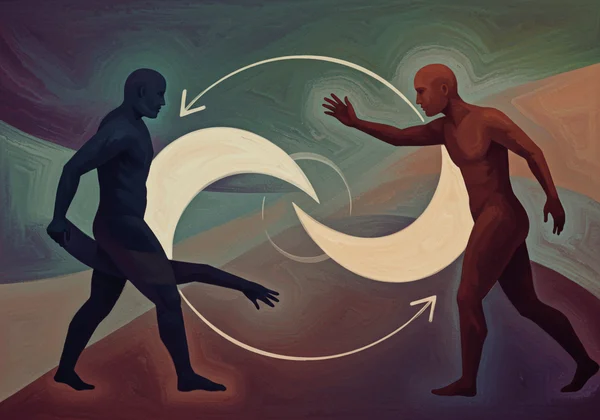
Couples often find themselves stuck in a repetitive loop. One partner's action triggers a reaction in the other, which in turn reinforces the first partner's beliefs and fears. For example, a person with avoidant traits might withdraw during stress, and their partner, fearing abandonment, might pursue them more intensely. This pursuit makes the avoidant partner withdraw further, solidifying a painful cycle. Recognizing these behavior patterns is crucial. It allows you to step outside the loop and see the dynamic for what it is—a dance of unmet needs and unexpressed fears, not a reflection of a lack of love.
Decoding Specific Traits in Romantic Relationships
While every individual is unique, certain personality disorder traits create recognizable patterns in romantic partnerships. A comprehensive personality disorder test can help identify which traits are most prominent. Understanding these specific dynamics can help demystify confusing behaviors and provide a framework for a more empathetic approach.
Borderline Personality Disorder Test Insights: Idealization and Devaluation
One of the most well-known patterns, often highlighted by a borderline personality disorder test, is the BPD relationship cycle. It often begins with intense idealization, where the partner is seen as perfect, a savior who can do no wrong. This phase is filled with passion and deep connection. However, due to a core fear of abandonment and emotional instability, a switch can occur, leading to devaluation. The partner is now seen as flawed, malicious, or disappointing. This "splitting"—seeing things in black and white—creates a volatile push-pull dynamic, leaving both individuals feeling exhausted and confused.
Narcissistic Relationship Patterns: Grandiosity and Empathy Gaps
Relationships involving narcissistic traits, which a narcissistic personality disorder test can help screen for, are often defined by a stark imbalance. The narcissistic relationship patterns typically revolve around the individual's need for admiration and a lack of genuine empathy for their partner's feelings. The relationship may start with "love bombing"—over-the-top affection and attention—to win the partner over. Over time, this can shift to control, criticism, and a focus on their own needs. The partner often feels invisible, as their emotional world is secondary to feeding the other's grandiosity and fragile self-esteem.
Other Traits: Avoidant, Dependent, and Paranoid Tendencies
Other personality traits also significantly impact love. Avoidant tendencies lead to an intense fear of intimacy and rejection, causing individuals to keep partners at a distance. Dependent traits can result in a relationship where one person feels unable to function without the other, placing immense pressure on their partner to be a constant source of support and decision-making. Finally, paranoid tendencies can sow seeds of distrust and suspicion, making it nearly impossible to build the security and safety that a healthy relationship requires.
If any of these patterns resonate with you, taking a moment for self-assessment can be a valuable step. You can gain initial insights with our personality disorder test into your own relational style.
Strategies for Healthier Couple Interactions
Recognizing challenging patterns is the first step, but the journey doesn't end there. With conscious effort and the right tools, couples can learn to navigate these dynamics more effectively and foster a more secure and loving connection.
Enhancing Communication: Active Listening and Validation Skills
Communication is more than just talking; it's about making your partner feel heard and understood. Active listening means putting aside your own agenda and truly focusing on what your partner is saying, both verbally and non-verbally. Validation skills are equally critical. Validation doesn't mean you have to agree with your partner, but it does mean acknowledging that their feelings are real and valid from their perspective. Simple phrases like, "I can see why you would feel that way," can de-escalate conflict and build an emotional bridge.
Setting Boundaries: Protecting Emotional Well-being
Healthy relationships require healthy boundaries. Boundaries are not walls to keep people out; they are guidelines that protect your emotional well-being and teach others how to treat you. For the partner of someone with intense emotional reactions, setting boundaries might mean saying, "I love you, but I cannot continue this conversation while you are shouting at me. Let's take a break and talk when we are both calm." This protects both individuals and creates space for more productive communication later.
Co-Regulating Emotional Storms Together
When intense emotions flare up, it can feel like a storm is taking over. Co-regulation is the process of helping each other return to a state of calm. Instead of reacting with anger or fear, a partner can offer a soothing presence. This could be as simple as speaking in a calm tone, offering a hug (if appropriate), or suggesting a shared calming activity like taking a walk. Learning to weather these emotional storms together, rather than being torn apart by them, can profoundly strengthen a couple's bond.

When and How to Seek Professional Support
While self-help strategies are powerful, some challenges require professional guidance. Recognizing when to seek outside support is a sign of strength and commitment to the relationship's health.
Recognizing the Need for Couples and Individual Therapy
If conflict is constant, if you feel unsafe, or if the same painful cycles repeat despite your best efforts, it may be time to seek therapy. Taking a personality disorder test beforehand can help you articulate your concerns to a professional. Couples therapy can provide a neutral space to learn healthier communication and interaction patterns. Individual therapy is also invaluable, as it allows each person to work on their own triggers, attachment styles, and emotional regulation skills. A therapist can provide tools and insights tailored to your specific situation.
Take a Free Personality Disorder Test: Your First Step to Self-Reflection
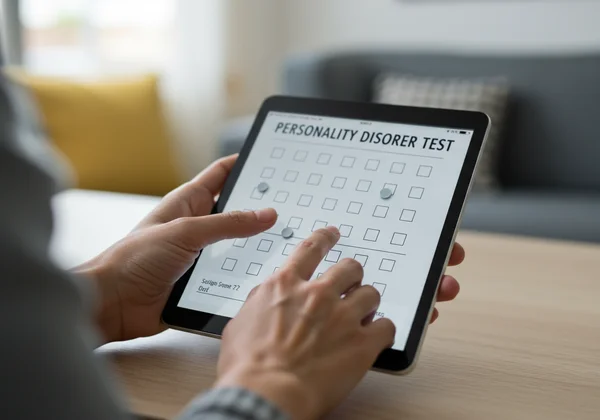
The journey toward professional help often begins with self-awareness. Asking yourself, "Could my personality traits be contributing to these issues?" is a courageous first step. A free personality disorder test can provide a structured way to engage in this self-reflection. It offers a private, low-pressure environment to explore potential areas of concern and helps organize your thoughts before speaking with a professional. To begin this process, you can start your free personality disorder test here.
Disclaimer: This article is for informational purposes only and does not constitute medical advice. The screening tool available on this website is not a diagnostic test. If you are concerned about your mental health or your relationship, please consult a qualified healthcare professional or therapist for an accurate diagnosis and treatment plan.
Embracing Hope: A Path to Healthier Relationships
Navigating a relationship affected by personality disorder traits is undeniably challenging, but it is not without hope. Understanding the underlying dynamics of fear, emotional dysregulation, and attachment is the key that unlocks compassion—for both your partner and yourself. By implementing strategies for better communication, setting healthy boundaries, and learning to co-regulate, you can begin to break free from destructive cycles.
Healing is a journey, not a destination. The first step is always awareness. If this article has resonated with you, we encourage you to take the next step. Visit our site to take the free, confidential personality disorder test. It can provide the preliminary insights you need to move forward with greater clarity and purpose, together.
FAQ Section
How do people with personality disorders behave in relationships?
The results from a personality disorder test can point to various behaviors, but common themes include emotional instability (intense mood swings), a fear of abandonment, difficulty with empathy, impulsive actions, and seeing a partner in black-or-white terms (all good or all bad). This can lead to volatile, unpredictable, and often painful relationship cycles.
Can people with BPD have a normal life?
Absolutely. While a borderline personality disorder test may indicate traits consistent with BPD, many people lead fulfilling and "normal" lives with the right support. Effective treatments like Dialectical Behavior Therapy (DBT) help individuals manage emotions, improve relationships, and build a life they feel is worth living.
How can I explain BPD to my partner?
Explain it with empathy and from a place of "we." Use "I" statements to describe your experience (e.g., "When I feel abandoned, my fear takes over"). You can share resources from reputable sources and frame it as a challenge you want to face together. The goal is to build understanding, not to place blame.
What should I do if my partner exhibits personality disorder traits?
First, encourage self-reflection and learning. Suggesting they explore their own patterns with a confidential personality disorder test can be a gentle start. You can discover your results with our online test as a way to open a dialogue. It's also vital to practice self-care, set firm boundaries to protect your own mental health, and consider seeking both individual and couples counseling for professional guidance.