Schizotypal Personality Disorder Symptoms: The 9 Signs & How to Identify Them
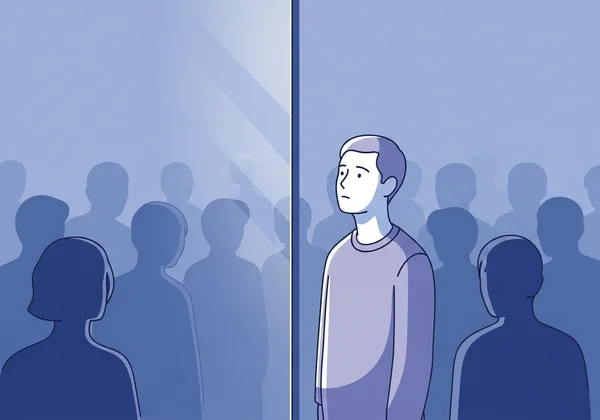
Do you often feel like an observer in your own life, watching social interactions from behind a glass wall? Or perhaps you have distinct, unconventional beliefs that others find difficult to understand. If you consistently struggle with close relationships and feel fundamentally different from those around you, you might be looking for answers.
Understanding schizotypal personality disorder symptoms is the first step toward making sense of these experiences. Schizotypal Personality Disorder (STPD) is a mental health condition characterized by severe social anxiety, thought disorder, paranoia, and often unconventional beliefs. It is more than just being introverted; it is a pervasive pattern of social and interpersonal deficits.
This guide will walk you through the 9 official signs of STPD, help you understand how they manifest in daily life, and clarify the next steps for self-discovery. You can also explore our personality disorder test to gain preliminary insights as you read.
What Is Schizotypal Personality Disorder (STPD)?
Schizotypal Personality Disorder is classified as a "Cluster A" personality disorder. In the world of psychology, Cluster A conditions are often described as "odd or eccentric." People with these traits typically have difficulty relating to others and may display behaviors that seem peculiar or unusual to the average observer.
Unlike social anxiety disorder, where the primary fear is judgment or embarrassment, the discomfort in STPD often stems from a deep-seated feeling of not fitting in, combined with suspiciousness about others' motives.
Defining the "Eccentric" Personality Type
It is important to distinguish between a unique personality and a disorder. Many people are eccentric, creative, or non-conformist. However, schizotypal personality disorder symptoms become a clinical concern when they cause significant distress or impairment in your life.
If your patterns of thinking prevent you from forming relationships, holding a job, or feeling safe in the world, it moves beyond a personality quirk. The hallmark of STPD is a pervasive pattern of cognitive distortions (unusual ways of thinking) and intense discomfort with close relationships.
When Does It Start? Onset and Prevalence
STPD is relatively rare, affecting approximately 3% to 4% of the general population. Like many personality disorders, the signs often begin to emerge in early adulthood. However, you might recognize patterns stretching back into adolescence.
As a teenager, a person who later develops STPD might have been viewed as a "loner," subjected to bullying, or described as having poor social skills. Recognizing these early timelines can be helpful when you are trying to reflect on your long-term patterns.
The 9 Official Schizotypal Personality Disorder Symptoms (DSM-5 Criteria)
To be diagnosed with STPD, a mental health professional looks for specific criteria outlined in the Diagnostic and Statistical Manual of Mental Disorders (DSM-5). A person must exhibit at least five of the following nine symptoms.
As you read through these, try to view them through a lens of curiosity rather than judgment.
1. Ideas of Reference: Finding Meaning in Coincidence
This involves interpreting casual incidents and external events as having a particular and unusual meaning specifically for you.
- What it looks like: You walk into a room, see two people laughing, and feel certain they are laughing about you.
- The nuance: Unlike a delusion (a fixed false belief), you can usually acknowledge that your feeling might not be true if someone challenges it. However, the initial gut feeling remains personal.
2. Odd Beliefs and "Magical Thinking"
One of the most distinct schizotypal personality disorder symptoms is magical thinking. This refers to the belief that your thoughts or actions can directly influence events in the world, inconsistent with subcultural norms.
-
Common examples: Believing you have a "sixth sense," telepathy, or clairvoyance.
-
Behavior: You might avoid stepping on cracks to prevent bad luck or believe that thinking about a disaster caused it to happen.

3. Unusual Perceptual Experiences & Bodily Illusions
This is not the same as the hallucinations found in schizophrenia. Instead, it is a distortion of reality.
- The experience: You might sense an invisible "presence" in the room when no one is there.
- Bodily illusions: You might feel like your hand is changing shape or that you are floating above your chair. These experiences are fleeting but unsettling.
4. Odd Thinking and Speech Patterns
Communication can be a major hurdle. Your speech might be vague, circumstantial, metaphorical, or overly elaborate.
- The listener's perspective: Others might struggle to follow your train of thought because you jump between loosely connected topics.
- Self-expression: You might use words in unique ways or focus heavily on abstract concepts rather than concrete details.
5. Suspiciousness or Paranoid Ideation
Trust is incredibly difficult for someone with STPD. You may harbor unfounded suspicions that others—even friends or family—are out to get you, deceive you, or manipulate you.
- Impact: This paranoia often leads to defensive behavior. You might withhold information or act guarded, which ironically makes social interactions more strained.
6. Inappropriate or Constricted Affect
"Affect" refers to your emotional expression. People with STPD often display a "flat" affect, meaning their face appears emotionless, or they make limited eye contact.
- Inappropriate responses: You might laugh at sad news or look blank when someone tells a joke.
- The disconnect: You might feel emotions internally, but your outward expression doesn't match the social context, making you seem aloof or "cold."
7. Behavior or Appearance That is Odd or Eccentric
This symptom is often what others notice first. It can manifest in how you dress or how you carry yourself.
- Appearance: Wearing mismatched clothes, clothes that don't fit the season, or unkempt grooming.
- Mannerisms: Talking to yourself in public or displaying unusual physical tics.
8. Lack of Close Friends or Confidants
Due to the combination of paranoia and social anxiety, people with STPD usually have very few close relationships.
- The circle: You might have first-degree relatives (parents, siblings) in your life, but lack friends outside the family.
- The reason: It is not necessarily that you want to be alone (like Schizoid Personality Disorder), but rather that closeness feels dangerous or confusing.
9. Excessive Social Anxiety That Does Not Diminish
For most people with social anxiety, familiarity breeds comfort. If you spend enough time with a group, the anxiety lessens.
- The STPD difference: In schizotypal personality disorder symptoms, the anxiety often remains high regardless of familiarity.
- The root: This anxiety is usually driven by paranoid fears (e.g., "They are judging me") rather than negative self-judgments (e.g., "I am not good enough").
Beyond the Textbook: What STPD Feels Like in Daily Life
Clinical lists can feel dry. To truly understand these traits, we need to look at how they manifest in the messy reality of everyday life.
Navigating Social Interactions (The "Outsider" Feeling)
Imagine walking into a party. While others naturally drift into groups, you feel like an anthropologist studying a different species. You are hyper-aware of every glance. If someone looks at their phone, you might immediately think, "They are texting someone about me."
This constant vigilance is exhausting. As a result, you might withdraw early or avoid the event entirely. It is not that you lack the desire for connection; it is that the bridge to get there feels impossible to cross.
The Internal World of the Loner
Internally, your world might be rich and vivid. Because the external world feels hostile or unpredictable, you may retreat into fantasies or abstract theories. You might spend hours researching occult topics, conspiracy theories, or metaphysical concepts. This internal richness is a coping mechanism, but it can further isolate you from shared reality.
Self-Check: Do these resonate?
- Do you often feel that casual events have a special meaning just for you?
- Is it hard for you to trust even your family members?
- Do people tell you that you speak in riddles or define words differently?
- Do you feel anxious around people even after you have known them for a long time?
Unsure About Your Traits? The Role of Self-Reflection
Recognizing these behaviors in yourself can be confronting. You might be wondering, "Is this just my personality, or is it something more?"
Why "Do I Have This?" Is Hard to Answer Alone
Self-perception is tricky. Because STPD involves paranoid ideation and unique thinking patterns, your brain is wired to interpret data differently. You might dismiss a symptom as "normal" because it has always been your reality. Conversely, you might read a list like this and pathologize normal eccentricities.
This is where objective tools become valuable. We cannot diagnose ourselves, but we can gather data to understand our baselines.
Using Our Educational Screening Tool for Insight
If the symptoms listed above sound familiar, taking a structured assessment can provide clarity. It helps organize your experiences into measurable categories.
We have designed a user-friendly tool to help you explore these specific indicators. It is not a diagnosis, but it is a powerful first step in self-awareness.

STPD vs. Schizophrenia: Understanding the Key Differences
A common fear when reading about schizotypal personality disorder symptoms is the worry: "Am I developing schizophrenia?" While they are related, there is a crucial distinction.
Is It Schizophrenia? The Reality Testing Distinction
STPD is often considered part of the "schizophrenia spectrum," but it is generally less severe. The key difference lies in psychosis.
- Schizophrenia: Involves a complete break from reality (psychosis). The hallucinations and delusions are fixed and intense.
- STPD: You may have illusions or paranoid ideas, but you can usually be talked out of them or recognize that they might not be real. This is called "reality testing," and in STPD, it generally remains intact.
Intensity and Duration of Symptoms
Schizophrenia often involves episodes of severe deterioration in functioning. STPD, on the other hand, is a personality disorder. This means the symptoms are a persistent, long-term pattern of behavior and experience that remains relatively stable over time, rather than occurring in episodic "breaks."
How Is Schizotypal Personality Disorder Diagnosed?
If your self-reflection or online screening suggests high indicators of STPD, the next step is a professional evaluation.
The Clinical Interview Process
A diagnosis is never made based on a blood test or a single scan. A psychiatrist or psychologist will conduct a thorough interview. They will ask about your childhood, your relationships, and your thought patterns. They are looking for pervasive patterns that have existed for years.
Why Online Tests Are Just the First Step
Online tools are excellent for "screening"—identifying potential red flags. However, only a trained clinician can rule out other possibilities like autism, bipolar disorder, or social anxiety. A professional adds context to the data.
Taking the Next Step in Your Mental Health Journey
Identifying with schizotypal personality disorder symptoms does not mean you are "broken." It simply means your mind processes the world differently. Understanding these traits is the most powerful way to reduce their negative impact on your life.
If you recognized yourself in the 9 signs, remember that support is available. Whether through therapy, support groups, or self-education, you can learn to navigate social interactions with more confidence.
Start by gathering more information about your own patterns. You can check your traits with this personality disorder test to get a personalized overview. Knowledge is the first step toward feeling less like an outsider and more at home in your own life.
Frequently Asked Questions
Is Schizotypal Personality Disorder genetic?
Yes, there is a strong genetic component. STPD is more common in people who have relatives with schizophrenia or other Cluster A personality disorders.
Can STPD be cured?
Personality disorders are generally considered enduring patterns, meaning there isn't a "cure" in the traditional sense. However, symptoms can be effectively managed. Therapy (especially CBT) and sometimes medication can significantly improve quality of life.
How does STPD differ from Social Anxiety Disorder?
The main difference is the reason for the anxiety. In Social Anxiety Disorder, you fear judgment or embarrassment. In STPD, the anxiety often stems from paranoia or fear that others have harmful intentions.
Is STPD the same as Autism?
No, though they can look similar (social withdrawal, limited eye contact). Autism typically involves repetitive behaviors and sensory sensitivities, whereas STPD involves "positive symptoms" like magical thinking and paranoia.
Is medication used for STPD?
There are no medications specifically FDA-approved for STPD itself. However, doctors often prescribe antipsychotics (in low doses) or antidepressants to help manage specific symptoms like anxiety or distorted thinking.